
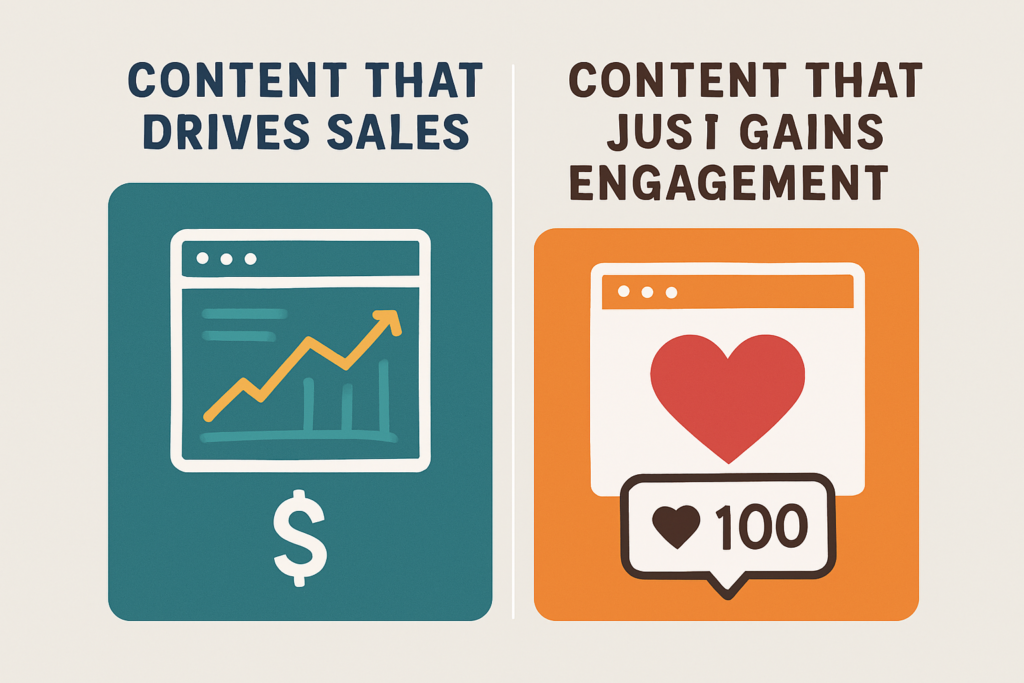
In today’s digital world, every brand is competing for attention. With countless posts shared every minute, receiving likes, comments, and shares may seem like success. However, not all engagement is the same. Viral content can make a brand popular, but it does not always lead to profit. The real difference lies between content that drives sales and content that only gathers reactions. Understanding this distinction can greatly improve your marketing strategy.
What Sales-Oriented Content Looks Like
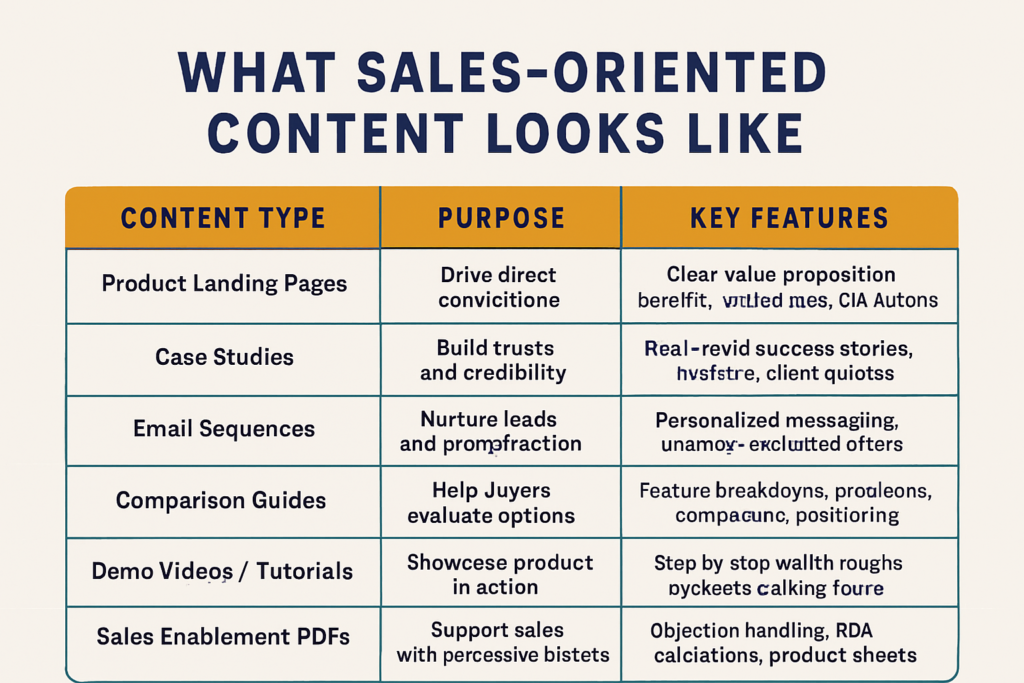
Sales-oriented content is designed with one primary purpose: to persuade the reader to take an action that moves them closer to buying. It blends value with strategy, emotion with logic, and information with urgency. Unlike traditional educational content, sales content guides, nudges, and prompts the customer toward a decision.
Here are some of the characteristics that generate sales:
1. It Educates, Not Just Entertains
Educational content positions you as an expert. It makes people trust your brand and rely on you for guidance. This educational content may include:
- Tutorials
- How-to guides
- Case studies
- Industry insights
When people learn from your content, they are more likely to buy from you.
2. It Targets the Right Audience
High engagement often brings in the wrong audience. Sales-focused content, on the other hand, is designed for people who genuinely need your product or service. When your message connects with your ideal customer, conversions increase naturally—even if overall engagement numbers are lower.
3. It Highlights the Benefits, Not Just the Features
Likes are often driven by aesthetics. Sales, however, are driven by value.
Content that converts explains:
- What problem your product solves
- What transformation it delivers
- Why it is better than alternatives
This taps into customer psychology and helps them visualize the results they will get.
4. It Includes a Clear Call to Action (CTA)
Every piece of sales-driven content guides the user toward the next step:
- “Click to buy”
- “Book a free demo”
- “Download the guide”
- “Sign up now”
Without a CTA, even the most informative content fails to convert.
Why Brands Often Fall into the Engagement Trap
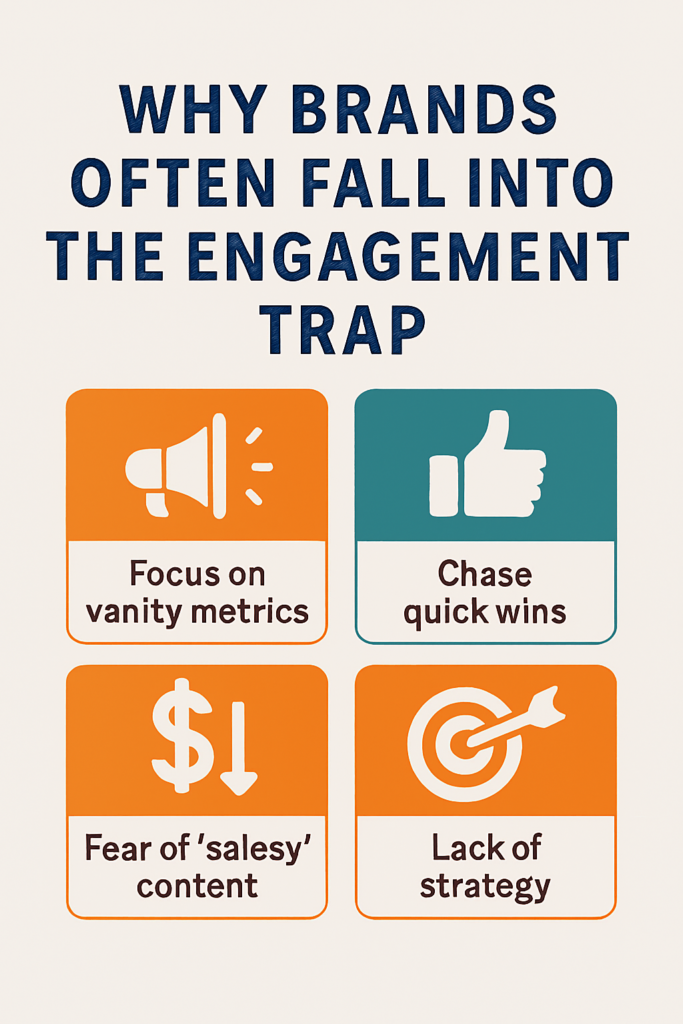
Brands are drawn to engagement because it delivers quick satisfaction. Likes, comments, and shares provide immediate feedback, creating a sense of success. A post going viral feels like a win. But this obsession with likes causes businesses to drift away from what truly matters: ROI.
Here’s why many brands produce engagement-only content:
- It’s easier to create entertaining content.
- The algorithm rewards popular posts.
- It boosts ego and social proof.
However, while engagement may grow your visibility, it won’t sustain your business without a strategy that converts attention into revenue.
True success comes from balance—creating content that attracts and converts engagement into sales.
How can we shift Engagement into Sales
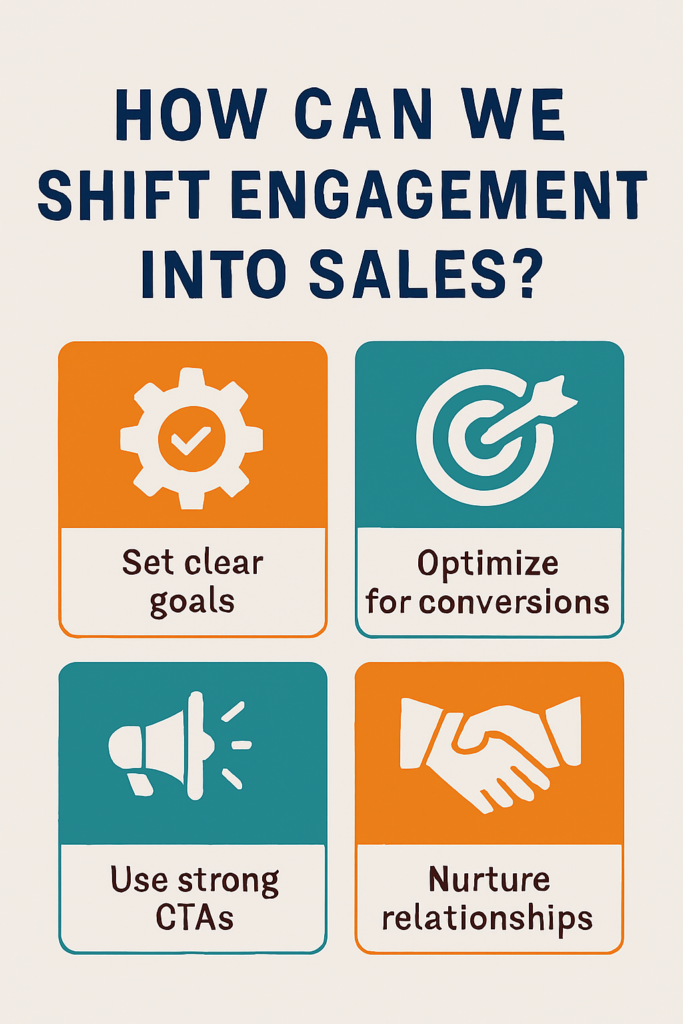
To achieve real brand growth, your content strategy needs to move beyond “getting likes” and focus on “getting leads.” Engagement may bring visibility, but leads bring customers—and that’s what drives sustainable success. Here are some of the solutions to convert the engagement into sales.
1. Understand the customer journey
Different types of content work best at different stages of the customer journey:
- Decision: Use testimonials, special offers, and clear calls-to-action (CTAs) to encourage final purchase decisions.
- Awareness: Share educational and relatable content that introduces your brand and builds trust.
- Consideration: Provide comparison posts, FAQs, and product demos to help potential customers evaluate their options.
2. Create Content That Builds Trust
Before people buy, they need to believe in your brand — your expertise, your intentions, and your ability to deliver results. Trust-driven content bridges this gap by showing proof, transparency, and real experiences instead of just promises.
3.Focus on Quality Over Virality
A post that brings 10 qualified leads is more valuable than one that brings 10,000 likes from random viewers.
Conclusion
Likes can make your content popular, but sales make your brand profitable. The true success in digital marketing belongs to brands that know how to turn attention into revenue. When creativity is combined with strategy, you produce content that not only captures attention but also delivers measurable results.
If engagement represents reach, then sales-driven content represents impact. And it is impact that builds a sustainable and successful business.