boldandbrilliant.in

Blogs

Meta Ads: The Modern Engine of Digital Advertising in 2026
Blogs

Meta Ads: The Modern Engine of Digital Advertising in 2026

In today’s digital marketing landscape, Meta Ads—powered by Meta Platforms—remain the dominant force in paid advertising. From start-ups, small businesses, to multi-national companies, Meta Ads has become the leading solutions of targeting audiences, expanding digital reach and boosting the conversions of businesses. In 2026, as algorithms evolve and audience behaviour shifts, Ads have only become more sophisticated—and more essential. What are Meta Ads? Meta Ads are the paid advertising system within Meta Platforms (Facebook, Instagram, Messenger, and Audience Network). They allow businesses to promote products or services to highly targeted audiences using AI-driven automation, creative-led targeting, and conversion optimization. In 2026, Ads remain the dominant engine for scaling visibility, driving conversions, and reaching billions of active users worldwide. Whether it’s an Instagram Reel ad, a Facebook carousel, or a Messenger-sponsored message, this help brands get visibility where people spend most of their time—social media. Why these Ads Are So Powerful? Meta Ads are powerful because they blend enormous reach with highly advanced targeting capabilities. With billions of users across its platforms, the Meta ecosystem gives you access to a truly global audience. Even more valuable is its ability to deliver pinpoint accuracy. It allows you to target people based on: How this Work? Meta Ads function on an auction-based model, but it’s not just about who spends the most. Meta prioritizes ads that deliver strong relevance and a positive user experience. Your ad’s performance is determined by three key elements: 1. Bid Amount How much you’re willing to pay for a result (click, purchase, impression). 2. Estimated Action Rate How likely the user is to perform the desired action. 3. Ad Quality & Relevance Better-quality ads cost less and perform better. Types of Ads You Can Run Meta Ads offers a wide variety of ad formats tailored for different goals: 1. Image Ads Simple, clean, and effective for brand awareness and product promotion. 2. Video Ads Great for storytelling, tutorials, and showcasing product features. 3. Carousel Ads Multiple images or videos in a single ad—ideal for e-commerce. 4. Collection Ads A combination of video/visual and product tiles, popular for mobile shoppers. 5. Lead Ads Pre-filled forms for capturing leads without leaving the app. 6. Reels Ads Fast-growing and ideal for reaching younger audiences. 7. Retargeting Ads Ads that reach people who already interacted with your website or content. The Future of Meta Ads In 2026, Ads continues to evolve with: The future points toward smarter, more personalized advertising powered by AI. Conclusion

Content That Drives Sales vs. Content That Just Gains Engagement
Blogs

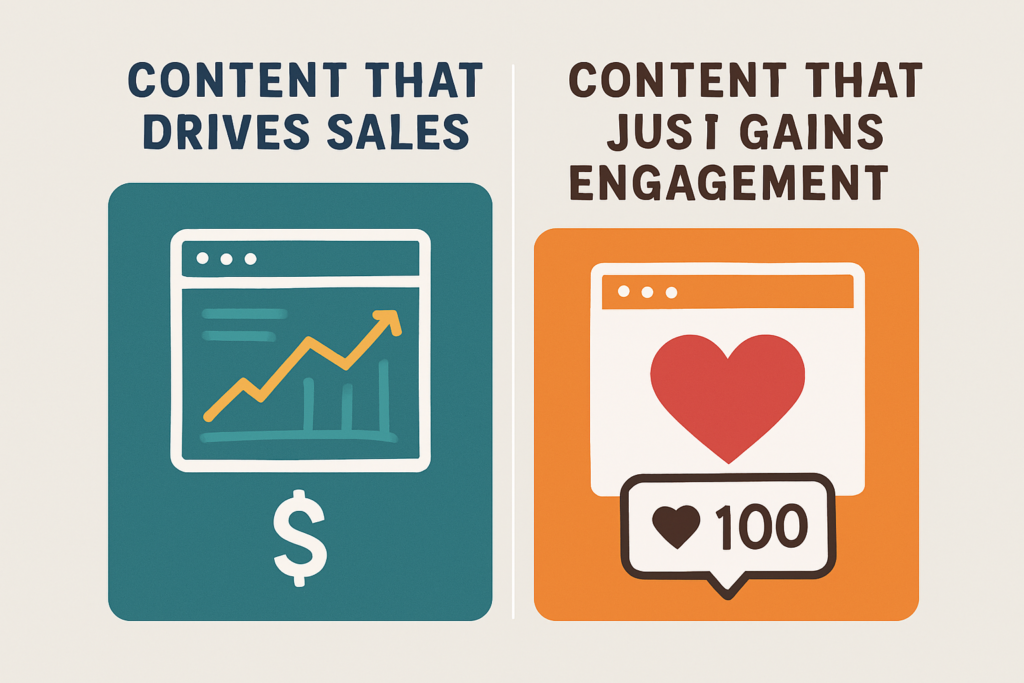
Content That Drives Sales vs. Content That Just Gains Engagement

In today’s digital world, every brand is competing for attention. With countless posts shared every minute, receiving likes, comments, and shares may seem like success. However, not all engagement is the same. Viral content can make a brand popular, but it does not always lead to profit. The real difference lies between content that drives sales and content that only gathers reactions. Understanding this distinction can greatly improve your marketing strategy. What Sales-Oriented Content Looks Like Sales-oriented content is designed with one primary purpose: to persuade the reader to take an action that moves them closer to buying. It blends value with strategy, emotion with logic, and information with urgency. Unlike traditional educational content, sales content guides, nudges, and prompts the customer toward a decision. Here are some of the characteristics that generate sales: 1. It Educates, Not Just Entertains Educational content positions you as an expert. It makes people trust your brand and rely on you for guidance. This educational content may include: When people learn from your content, they are more likely to buy from you. 2. It Targets the Right Audience High engagement often brings in the wrong audience. Sales-focused content, on the other hand, is designed for people who genuinely need your product or service. When your message connects with your ideal customer, conversions increase naturally—even if overall engagement numbers are lower. 3. It Highlights the Benefits, Not Just the Features Likes are often driven by aesthetics. Sales, however, are driven by value. Content that converts explains: This taps into customer psychology and helps them visualize the results they will get. 4. It Includes a Clear Call to Action (CTA) Every piece of sales-driven content guides the user toward the next step: Without a CTA, even the most informative content fails to convert. Why Brands Often Fall into the Engagement Trap Brands are drawn to engagement because it delivers quick satisfaction. Likes, comments, and shares provide immediate feedback, creating a sense of success. A post going viral feels like a win. But this obsession with likes causes businesses to drift away from what truly matters: ROI. Here’s why many brands produce engagement-only content: However, while engagement may grow your visibility, it won’t sustain your business without a strategy that converts attention into revenue. True success comes from balance—creating content that attracts and converts engagement into sales. How can we shift Engagement into Sales To achieve real brand growth, your content strategy needs to move beyond “getting likes” and focus on “getting leads.” Engagement may bring visibility, but leads bring customers—and that’s what drives sustainable success. Here are some of the solutions to convert the engagement into sales. 1. Understand the customer journey Different types of content work best at different stages of the customer journey: 2. Create Content That Builds Trust Before people buy, they need to believe in your brand — your expertise, your intentions, and your ability to deliver results. Trust-driven content bridges this gap by showing proof, transparency, and real experiences instead of just promises. 3.Focus on Quality Over Virality A post that brings 10 qualified leads is more valuable than one that brings 10,000 likes from random viewers. Conclusion Likes can make your content popular, but sales make your brand profitable. The true success in digital marketing belongs to brands that know how to turn attention into revenue. When creativity is combined with strategy, you produce content that not only captures attention but also delivers measurable results. If engagement represents reach, then sales-driven content represents impact. And it is impact that builds a sustainable and successful business.

Influencers
Blogs

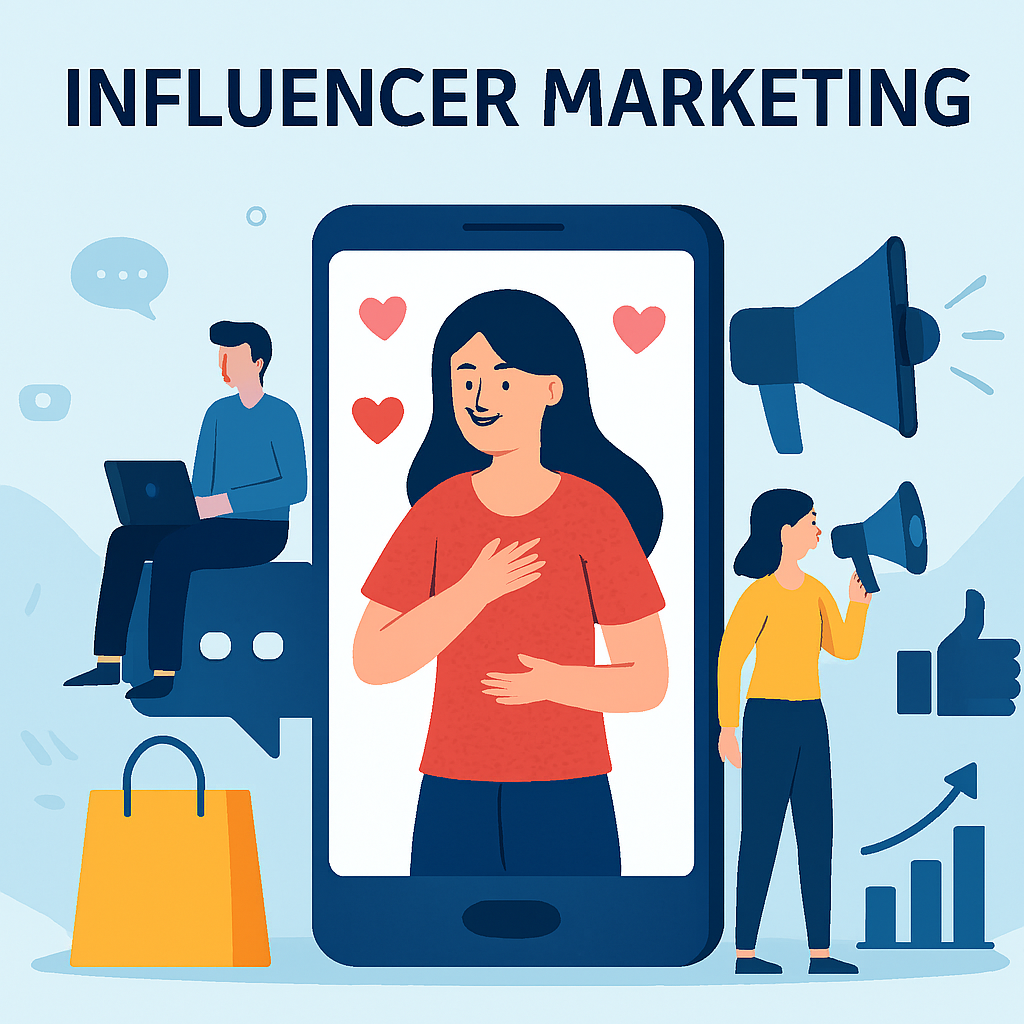
The Rise of Influencer Marketing in 2026 — The Trend Everyone Is Obsessed With

In 2026, Influencer marketing has officially become an essential part of digital marketing. The early days of influencer marketing were simple, but today it’s a wide-ranging ecosystem worth billions, redefining commerce, thought, and social connection in the digital age. In 2026, this trend isn’t just growing—it’s booming. Today, Businesses of all sizes, from start-ups to multinationals, are investing in influencers at a high rate to reach audiences credibly and increase the return rates. Businesses are investing in influencers for various reasons. Who are influencers? Influencers are individuals who have built a loyal audience on social media and can influence people’s opinions, decisions, or buying behaviour through their content. Influencers establish credibility and trust among their audiences by consistently sharing content that connects with followers—whether through relatable personal narratives, candid product evaluations, demonstrations of expertise, or entertainment that encourages emotional connection. How can we become influencers? In 2026, becoming an influencer is completely possible. People with smartphones, a clear niche or consistency, can easily build an audience. There are a few basic guidelines or steps to become an influencer in the market. Step1. Opt for a Domain You Authentically Connect With Step2. Choose the right platforms: Instagram, YouTube or Facebook Step3. Develop a Well-Defined Individual Identity Step4. Posting content daily Step5. Create high-quality content Step6. Engage with the audience on a daily basis Step7. Use trending audios or hashtags Step8. Collaborate with other creators. Step9. Build a strong portfolio Step10. Start working with brands. Why choose influencer marketing? Influencer marketing has become one of the most effective digital marketing strategies in 2026. Influencer marketing is a modern digital marketing strategy where brands collaborate with influencers—people who have built a loyal audience on social media—to promote their products or services. Instead of traditional ads, influencer marketing leverages the trust, authenticity, and influence that creators have over their followers. Influencer marketing has taken centre stage in 2026, and everyone’s talking about it. Let’s unpack what’s driving this rise and how brands can utilise it to their advantage. 1. Influencers Have Become the New Age Celebrities The traditional way of advertisement are longer way of promoting brands. In 2026, influencers, especially micro influencers( 10k-100k followers) and nano influencers(1k-10k followers), have built trust and reliability between communities. Now, people feel free to connect with influencers as they share their daily routine experiences with the public. 2. The Shift from Ads to Authenticity Consumers are tired of ads. Between pop-ups, sponsored videos, and irrelevant banners, traditional advertising is losing its impact. Instead, people prefer content that feels real.Influencer marketing thrives because: 3. AI Is Transforming Influencer Marketing Artificial Intelligence is playing a major role in 2026’s influencer landscape. From campaign planning to performance tracking, AI tools are helping brands make smarter decisions.AI now helps brands: 5. Short-Form Video Continues to Dominate Instagram Reels, and YouTube Shorts are still ruling social media in 2026. Short-form videos are quick, addictive, and shareable—perfect for influencer content. Brands prefer short videos because: 6. Brand–Influencer Partnerships Are Becoming Long-Term Earlier, influencer collaborations were mostly one-time sponsored posts. But in 2026, brands are focusing on long-term relationships. Why? 7. Influencer Marketing Gives Small Businesses a Powerful Edge Influencer marketing is not just for big brands—it’s a game-changer for small businesses. With micro influencers becoming more affordable and accessible, local businesses can: Conclusion As we move deeper into 2026, it’s clear that influencer marketing is no longer optional—it’s essential. Consumers trust real voices, authentic reviews, and relatable content more than traditional ads. Brands that leverage the power of influencers will continue to grow faster, build stronger communities, and achieve better ROI. Whether you’re a startup, a growing business, or an established brand, now is the time to embrace influencer marketing and make it a core part of your digital strategy. The future belongs to those who create connections—not just campaigns.

MARKETING GRAVITY
Blogs

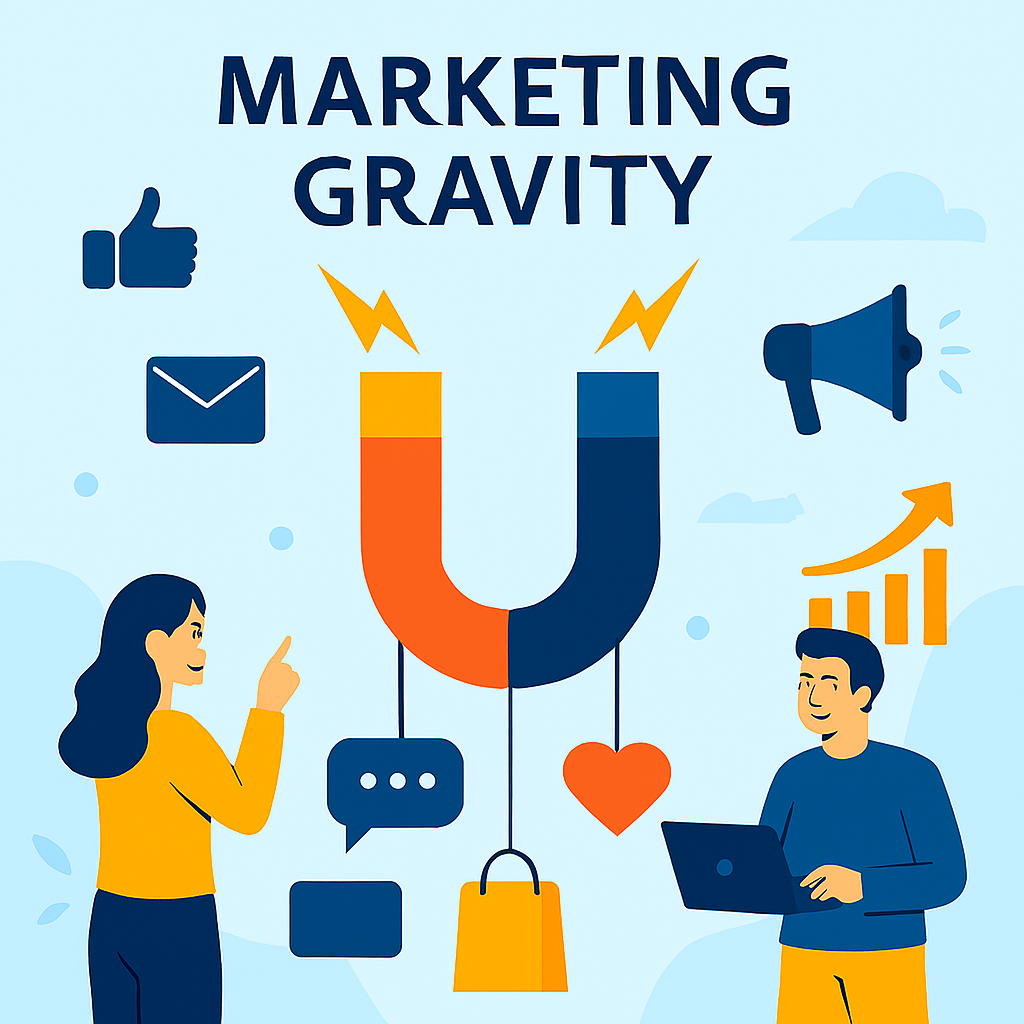
Marketing Gravity: How Brands Pull Customers Without Chasing Them

In today’s digital-first era, customers don’t want to be chased. Pop-up ads are dismissed, cold calls go unanswered, and salesy messages are quickly blocked. What truly works now is marketing gravity—a strategy where brands attract customers organically rather than running after them. Just like gravity pulls objects without force, marketing gravity pulls customers through value, relevance, trust, and visibility. When done right, people come towards your brand, not the other way around. This blog explores how marketing gravity works, why it is powerful, and how brands can apply it to grow organically. What Is Marketing Gravity? Marketing gravity is the power of a brand to attract customers effortlessly—not through hard selling, but through strong positioning, consistent value, and genuine trust-building. Instead of chasing audiences, the brand becomes so magnetic, credible, and relevant that customers naturally gravitate toward it and choose it on their own. It’s the opposite of push marketing. Push marketing: – Ads– Promotions– Direct selling– Outbound marketing Pull marketing: – SEO & content– Social proof– Strong branding– Customer experience The more a brand invests in value-driven marketing, the stronger its gravitational pull. Why Marketing Gravity Matters in 2026 Consumers today are bombarded with: Brands that chase customers get ignored. Brands that build trust, deliver value, and show up consistently earn loyalty. Key reasons marketing gravity is essential: ✔ Customers trust organic discovery more than ads People rely more on search results, reviews, influencer opinions, and content. ✔ Lower cost, higher long-term results SEO, content, and a strong brand reduce long-term ad spend. ✔ Builds deep emotional connection Customers feel they chose the brand, not that it was forced on them. ✔ Improves retention & referrals When a brand becomes a go-to solution, customers naturally bring others. Marketing gravity is not just a strategy—it’s a growth engine. The Science Behind Marketing Gravity Marketing gravity works through three powerful forces: Force 1: Attraction Through Value When your content, product, or service solves real problems, customers come to you naturally. Force 2: Trust Through Repetition The more often users see your brand providing value, the stronger the trust. Force 3: Visibility Through Consistency Consistent presence across platforms increases recall and credibility. These three forces combine to create a brand that customers feel pulled towards without pressure. Elements That Create Strong Gravity A. Strong Brand Positioning A powerful brand starts with clarity. Positioning defines how your business is perceived and why customers should choose you. To build strong positioning, a brand must be clear about: B. High-Value Content Ecosystem Content is the core of marketing gravity. This includes: How to Build Gravity for Your Brand This is very important to build a marketing gravity for the brand. The gravity of marketing can be built through various steps: Step 1.Define your brand Step 2. Build you Content awareness Step 3. SEO optimization Step 4. Showcase you social proofs Step 5. Build consistency Showcase your brand regularly on various social platforms such as Step 6. Focus on experience Conclusion Marketing today is no longer about who shouts the loudest—it’s about who provides the most value. In a world overflowing with noise, ads, and constant selling, customers gravitate toward brands that feel genuine, helpful, and trustworthy. When your brand answers real questions, solves real problems, and shows up consistently, customers choose you on their own. Marketing gravity captures this shift perfectly. Instead of pushing messages onto people, it creates a natural pull by building authority, delivering consistent value, and earning long-term trust.

ARTIFICIAL INTELLIGENCE
Blogs

The Rise of AI Tools in Marketing

In 2026, Artificial Intelligence (AI) has become the backbone of modern marketing, reshaping how brands create content, analyse data, communicate with customers, and execute campaigns. What was once considered futuristic or experimental has now become essential for every marketing team—whether it’s a global brand, a start-up, or a small business. AI is no longer just a competitive advantage—it’s a fundamental requirement for staying relevant. Marketers who embrace AI aren’t simply saving time; they are unlocking new levels of creativity, accuracy, and strategic insight. AI tools help teams operate with unmatched efficiency, personalise user experiences at scale, and build campaigns that outperform traditional methods. This article provides an in-depth look at the most impactful AI tools in marketing today—their descriptions, use cases, and the unique ways they’re transforming the digital landscape. 1. Content Creation & Copywriting Tools – AI Content is the backbone of every marketing strategy. Whether it’s website copy, social media captions, blogs, ads, or email campaigns, content plays a powerful role in shaping customer perception and influencing decisions. With AI-powered writing tools, marketers can now produce high-quality content in minutes rather than hours. CHAT GPT ChatGPT is a state-of-the-art artificial intelligence assistant designed to help businesses, creators, and individuals complete tasks quickly and efficiently. Powered by advanced language models, ChatGPT can write content, answer questions, generate ideas, handle customer support, draft emails, produce code, and assist with learning and research. Its versatility makes it a powerful tool for productivity, creativity, and decision-making. Use Case:Blog articles, ad copy, social media content, product descriptions, headlines, FAQs, customer service replies, and technical explanations. Impact:ChatGPT enables marketers to produce content faster, brainstorm ideas, refine messaging, and maintain a consistent brand tone. It reduces writer’s block, speeds up creativity, and supports multilingual content creation—making it one of the most widely used tools in marketing today. Copilot Microsoft Copilot is an advanced AI productivity assistant integrated across Microsoft 365 and Windows. It supports users with writing, data analysis, email drafting, presentations, coding assistance, meeting summaries, design suggestions, and workflow automation. Copilot enhances tools like Word, Excel, PowerPoint, Outlook, Teams, and Windows, making work smarter, faster, and more efficient. Use case: Copilot helps you write, analyze, create, and automate tasks instantly using AI. Impact: Copilot boosts productivity by making work faster, smarter, and more efficient with AI. Jasper AI Jasper AI is a powerful generative AI writing platform built to streamline content creation for businesses, marketers, and creators. It analyses your brand voice, understands your writing goals, and produces high-quality content—blogs, ads, captions, email campaigns, sales pages, and more. With automated workflows, real-time optimization, and team collaboration features, this helps you scale content production effortlessly while maintaining consistency and creativity. Use Case:Creating SEO-optimized blogs, high-converting landing pages, email campaigns, and brand messaging frameworks. Impact:This helps businesses scale content production without sacrificing quality. Its templates, brand voice profiles, and campaign workflows make it ideal for agencies and companies needing large content volumes. 2. Visual & Creative Tools – AI Visual content is more important than ever. Audiences scroll fast, and brands must stand out instantly. AI-powered creative tools make professional-level design accessible to everyone. Canva AI Canva AI is an advanced design-powered artificial intelligence tool that transforms how users create visual content. It automates design tasks, generates layouts, enhances images, writes content, and offers smart recommendations to help users design with ease. Whether you’re building a brand, making presentations, or creating marketing materials, this simplifies the process and delivers professional-quality results in minutes. Use Case:Designing social media posts, flyers, marketing slides, ads, infographics, thumbnails, and brand kits. Impact:This enables non-designers to create stunning visuals within minutes. With thousands of templates and intuitive editing tools, it speeds up creative workflows and improves content quality without requiring graphic design expertise. Runway ML Runway AI is an advanced generative platform built for creators, filmmakers, designers, and marketers. It offers cutting-edge tools for video editing, image generation, VFX, motion tracking, and text-to-video creation. With its intuitive interface and real-time features, This streamlines the creative process, enabling users to produce cinematic visuals, branded content, and high-quality digital media faster than traditional methods. Use Case:Creating video ads, AI-generated scenes, motion graphics, product demos, and explainer videos. Impact:Runway ML democratises video production, allowing even small businesses to produce professional-level videos without expensive equipment or editing teams. 3. SEO & Analytics Tools Search engine optimization (SEO) is essential for organic visibility. This helps marketers understand user intent, analyse competitors, and create search-optimized content. Surfer SEO Surfer SEO is a comprehensive, AI-driven on-page optimization platform designed for marketers, writers, and SEO professionals. By analyzing real-time SERP data, keywords, structure, and competitor content, Surfer provides actionable insights to help you create high-ranking articles. Its features include the Content Editor, Keyword Research, Audit, and AI content generation, making it an essential tool for growing organic traffic efficiently. Use Case:Keyword research, SERP analysis, content scoring, and SEO-driven writing guidelines. Impact:Surfer SEO helps marketers create content that ranks faster and performs better by aligning closely with Google’s search signals. HubSpot AI HubSpot AI is an advanced AI-powered solution integrated into the HubSpot CRM platform, designed to help businesses streamline their marketing, sales, and customer service processes.It automates repetitive tasks, generates content, provides predictive insights, personalizes customer interactions, and enhances team productivity. With AI-assisted emails, chat responses, content generation, reporting, and forecasting, This enables businesses to scale smarter and operate more efficiently. Use Case:Predicting customer behavior, automating workflows, analyzing campaign performance, and personalizing communication. Impact:This gives marketers a complete view of customer journeys, helping them design more effective and targeted campaigns. 4. Customer Engagement & Automation Tools – AI Customer experience is central to modern marketing. AI automates conversations, improves support speed, and enhances customer satisfaction. Notion AI Notion AI is a powerful AI-enhanced productivity tool integrated into the Notion workspace. It helps users write faster, summarize notes, generate ideas, analyze information, and automate routine tasks. With capabilities like content drafting, translations, action item extraction, and task automation, this boosts efficiency for teams, creators, entrepreneurs, and students. Use Case:Managing
SEO - BOLD AND BRILLIANT
Blogs

How Does SEO (Search Engine Optimization) Help My Business Growth?

In Today’s digital world, customers easily rely on search engines like Google to find products, services, and trusted brands. Whether someone is searching for a nearby restaurant, a digital marketing agency, or a product review, their journey almost always begins online. So, SEO (Search Engine Optimization) has become one of the most powerful growth tools for all businesses to showcase their brand online. SEO is the process of optimising a website so that a brand or business ranks higher on search engine results pages. The higher the brand appears, the more brand visibility, traffic, trust, and revenue your business attracts. But SEO goes far beyond just “ranking on Google.” It shapes user experience, brand credibility, and long-term sustainability. There are various key points that SEO helps businesses grow and create long-term results. 1. SEO Attracts High-Quality and Intent-Driven Traffic While paid advertising pushes messages outward, SEO naturally pulls in users who are already searching for what you provide. This makes search-driven traffic incredibly valuable, as it carries stronger relevance and higher purchase intent. SEO helps put your business in front of these ready-to-convert customers at the exact moment they need you. 2. SEO increases online visibility Most online journeys start with a search engine, making visibility on Google more important than ever. If your website ranks on page one, it will increase the chances of discover website dramatically. When customers search for something relevant to your business—like “digital marketing services,” “best salon near me,” or “solar panel dealers”—appearing at the top positions helps your brand get seen instantly. Higher visibility refers : When your business consistently appears on search engines, customers naturally recognise and trust you more. 3. SEO Delivers Higher ROI Compared to Paid Advertising Paid ads stop working the moment you stop paying. SEO, on the other hand, continues to bring traffic long after the optimization is done. This makes SEO one of the most cost-effective marketing strategies. While the initial investment may take time to show results, the long-term benefits are unmatched: Brands that prioritise SEO consistently outperform competitors who depend only on short-lived paid advertising. 4. SEO Helps You Compete With Bigger Brands Even if brands are running small or medium-sized businesses, SEO gives you the power to compete with large corporations. Local SEO, in particular, helps your business reach customers in your area without needing massive budgets.With the right strategy, your business can outrank: Google rewards relevance, quality, and user experience—not just brand size. 5. SEO Supports Long-Term Business Growth SEO is far from a short-term fix—it is a strategic, long-term investment that delivers exponential growth. As its impact compounds, brands that maintain consistency see increasingly stronger and more sustainable results.Over time, SEO helps you achieve: This is why SEO remains a core pillar for long-term, sustainable business growth. 6. SEO Builds Trust and Brand Credibility Consumer trust in Google is strong. So when your site earns a top position, your brand is immediately viewed as authoritative and trustworthy. Ranking on the first page indicates:Professionalism Good SEO includes creating helpful content, maintaining fast page speed, building quality backlinks, and ensuring a secure (HTTPS) website. All these efforts collectively build a trustworthy online presence. 7. SEO Strengthens Your Content Marketing Strategy Content and SEO complement each other perfectly. Great content boosts your search rankings, while SEO makes sure your content gets discovered by the right people. It helps your business grow by: Your website becomes a valuable resource in your industry, attracting repeat visitors and building loyalty. Conclusion “SEO isn’t just another marketing tool—it’s a long-term growth engine that transforms your digital presence. With better visibility, stronger credibility, targeted traffic, and improved user experience, it becomes one of the most influential drivers of business success.In 2026 and beyond, brands that invest in SEO will outperform competitors, capture more customers, and build lasting, future-ready businesses.”

DIGITAL MARKETING
Blogs

Why Every Business Needs a Strong Online Presence in 2026

In 2026, the digital world has become the centre of communication, shopping, research, and decision-making. This shift has made a strong online presence essential for every business, small or large. To survive and grow in today’s competitive market, businesses must ensure they are visible, trustworthy, and active across digital platforms. 1. Customers Depend on Online Searches Nowadays, Customers are highly dependent on online research before making a purchase. From Google search to social media platforms, people get instant reviews and brand comparisons. If your business is not available online on various platforms, such as Social media, websites and Emails, then your business has less credibility. A strong online presence ensures customers find you when they need you, helping you attract high-intent buyers. According to recent industry trends, over 80% of buyers research online before making any purchase, big or small. 2. Builds Brand Authority In 2026, authority matters as much as visibility. People are more likely to trust brands that educate them and provide value to them. By publishing blogs, videos, and helpful guides, you position your business as an expert in your industry. When people see helpful tips, professional visuals, customer testimonials, and industry expertise coming from your brand, they begin to trust your business more deeply. When customers see you sharing professional content, they see you as a reliable and knowledgeable brand, making them more confident in choosing your services, like YouTube Marketing, Web Design, and Social Media Marketing. 3. Enhances Lead Generation & Sales A strong online presence creates multiple touchpoints where potential customers can interact with your business. When your brand is visible across digital platforms, you create multiple pathways for potential customers to reach you. Your website can capture leads through contact forms, service pages, and online inquiries, while social media platforms drive engagement through DMs, comments, and call-to-action posts. Google Business Profile helps customers call you instantly, request directions, or check reviews before making a decision. Each platform becomes a source of leads and sales. With the right decision, your business can generate traffic, inquiries, and conversions 24/7—without depending solely on offline methods. 4. Supports Customer Experience & Convenience Convenience is considered one of the biggest reasons customers choose one brand over another.Online tools such as digital menus, booking systems, e-commerce stores, and instant messaging make the buying process faster and more comfortable. With an online presence, you make it easier for customers to: A smooth digital experience increases conversions with customers and helps in building the long term relationship with customers. 5. First Impressions Are Now Digital Website, SEO rankings, Social media and Emails act as the 24/7 digital storefront of businesses. Your website, social media profiles, and Google Business listing act as your digital storefront, shaping how customers perceive your brand within seconds. A clean, professional, and mobile-friendly website immediately signals credibility, while outdated pages or missing information can make potential customers lose trust instantly. When customers search for your brand: 6. Enhances Lead Generation & Sales A strong online presence creates multiple touchpoints for businesses where potential customers can interact with your business easily. They provide customers with easy access to your offerings through contact forms, direct messages, online booking systems, and e-commerce checkouts. With the right SEO and content strategy, your online platforms attract high-intent leads who are already searching for solutions you provide. This leads to more inquiries, more conversions, and ultimately more revenue. Each platform becomes a source of leads and sales. With the right decisions, your business can generate traffic, inquiries, and conversions 24/7—without depending solely on offline methods or traditional methods of marketing. 7. Online Presence Protects You From Market Changes The digital world evolves quickly, and customer behavior continues to shift every year. Whether it’s a new social media platform, changing search trends, or sudden economic disruptions, businesses must stay adaptable to survive. A strong online presence gives you that flexibility.A strong online presence protects your business from: In 2026, online presence acts as a long-term security shield that protects your business from sudden changes and keeps you ahead of evolving trends. Conclusion A strong online presence in 2026 is no longer a luxury—it is a necessity for the survival and success of businesses. It helps businesses attract customers, build trust, increase sales, stay competitive, and prepare for the future. Whether through a website, social media, SEO, reviews, or content, your digital identity is what drives customer decisions. The stronger your online presence, the stronger your business.

DIGITAL MARKETING
Blogs

Digital Marketing Strategies for Small Businesses in 2026

In 2026, Digital Marketing is more advanced and customer-focused than ever before. Whether you are a local store or an online brand, the right mix of Digital Marketing and Digital Marketing strategies for small businesses can help you attract high-quality traffic and long-term customers. With more people searching online like Boldandbrilliant, using social media for product discovery, and trusting digital reviews, small businesses must adopt modern digital marketing strategies to stay competitive. Social Media Optimisation In 2026, Social media platforms like Instagram, YouTube, and Facebook are becoming powerful search engines. People now search for local businesses, tutorials, reviews, and solutions directly on social media. To rank higher in these searches: Optimising your social content helps your business appear when customers search for products or services in your industry. 2. Build Social Proof & Customer Trust Customers trust real experiences, not advertisements. Social proof acts as digital word-of-mouth. Way to build social trust: Strong social proof increases credibility and helps customers make confident decisions. 3. Build Strong Online presence A strong online presence is the foundation of digital marketing in 2026. Customers expect every business to be visible online, easily searchable, and professionally presented. Start with a clean, mobile-responsive website that loads fast and communicates your brand’s message clearly. Digital Marketing also optimize your Google Business Profile with updated photos, working hours, reviews, and keywords. A strong online presence builds trust and increases the chances of converting visitors into paying customers. 4. Improve Local SEO for Nearby Customers Local SEO is one of the most powerful tools for small businesses in 2026. When people search “near me,” your business should appear in the top results. To boost local SEO: Local SEO of businesses like Boldandbrilliant helps in attracting nearby customers, increases store visits, and boosts credibility. 5. Strengthen Email Marketing & Customer Retention Email marketing continues to deliver high ROI in 2026. Automation tools allow small businesses to engage customers without manual effort. Tips to use Email Marketing for: Retaining customers is cheaper than finding new ones, and Email Marketing is one of the best retention tools. 6. Create High-Quality Content Marketing Content marketing remains one of the most effective digital marketing strategies. It positions your brand as an expert and helps drive organic traffic through targeted keywords. Types of content that work in 2026: High-quality content helps improve your SEO ranking, builds brand authority, and increases customer trust—essential for small business growth. Conclusion Digital marketing in 2026 gives small businesses endless opportunities to grow using affordable, smart, and result-driven strategies. With the right combination of SEO, content marketing, local search, social media optimisation, AI automation, and targeted ads, any business like Boldandbrilliant can build visibility, attract customers, and grow consistently. By using both short-tail and long-tail keywords, you can boost your search ranking and reach customers who are ready to take action.

DIGITAL MARKETING
Blogs

Which Type of Digital Marketing is best for business?

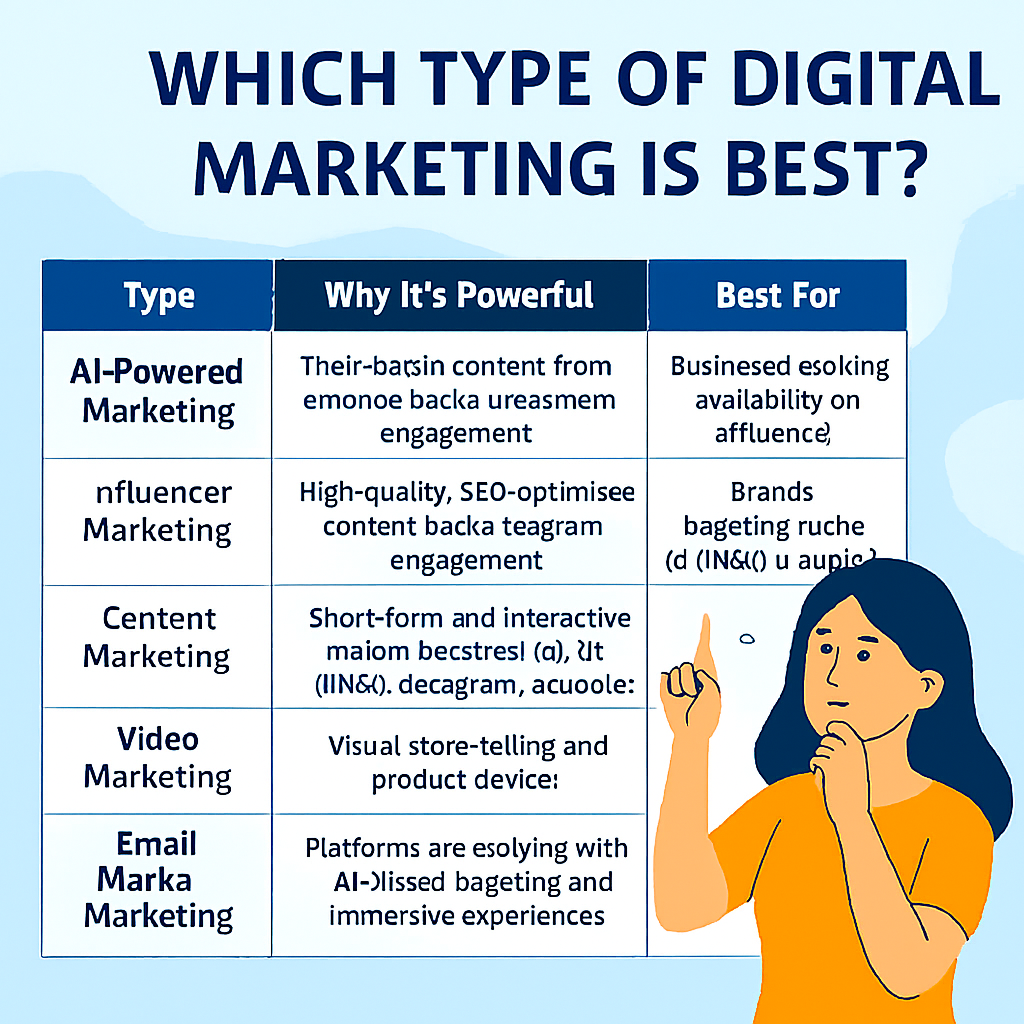
Digital Marketing is known to be the promotion of products, brands and services through online platforms and latest technologies to connect with the targeted audience. It helps the brands to reach out to customers globally without any limitation at the right time. Digital marketing is not one-size-fits-all; instead, it offers a variety of strategies that work differently for different types of businesses. To make a decision, it is important to understand the different types of Digital Marketing. There are many types of Digital marketing which are used in promoting businesses, such as Search Engine Optimization(SEO), Website Design, Social Media Marketing, Email Marketing, YouTube Marketing and Affiliate Marketing. Search Engine Optimization Search Engine Optimization(SEO) refers to the process of optimising a website to rank much higher on search engines like Google. When the public searches for products or services related to business on Google, SEO helps your website appear in the top rankings. This ranking will lead the public to visit your website easily and view your products and services. SEO is best for Key benefits of choosing SEO Social Media Marketing Social Media Marketing is considered an important part of Business promotion. It includes the promotion of products through various platforms such as Facebook, Instagram, YouTube and Pinterest and offers a wide choice of activities like engaging with the community, Paid Advertisement, Influencer partnership with brands. While using all these platforms, a business can easily connect with its customers. As customers are very active on social media, Brands can easily attract customers with advertisements Social Media Marketing is best for. Key Benefits of choosing Social Media Marketing WEBSITE DESIGN Website Design is the process of building a responsive, user-friendly website that delivers a seamless experience across all devices. A well-designed website enhances your brand and helps people choose it to purchase products and services. This modern way of Digital Marketing helps in building trust and a long-term relationship with their customers. Website Design is best for. Key Benefits of choosing Website Design Email Marketing Email marketing is a highly effective digital strategy for connecting with your audience directly through personalised emails. With advanced segmentation and automation tools, Email marketing allows businesses to deliver the right message to the right audience at the right time. It involves sending newsletters, promotional offers, product updates, and automated sequences to nurture leads and convert them into loyal customers. Email Marketing is best for. Key Benefits of choosing Email Marketing YOUTUBE MARKETING YouTube marketing involves using video content to promote your brand, educate your audience, and drive engagement on the world’s second-largest search engine. With billions of active users, YouTube offers massive opportunities for brands to reach both global and local audiences. It includes creating tutorials, product demos, testimonials, behind-the-scenes videos, ads, and informative content that builds trust while showcasing your expertise. YOUTUBE MARKETING IS BEST FOR. Key Benefits of Choosing YouTube Marketing. Affiliate Marketing Affiliate Marketing` involves a performance-based strategy where businesses partner with affiliates—bloggers, influencers, or publishers—who promote their products or services. Affiliates earn a commission for every sale, lead, or action generated through their unique tracking links. This approach expands your brand’s reach without upfront advertising costs, making it one of the most cost-efficient marketing methods. Affiliate Marketing is best for. Key Benefits of choosing Affiliate Marketing

Social Media Marketing
Blogs

Latest Trends in Social Media Marketing

Social Media Marketing is continually evolving, and brands must stay connected with emerging trends to remain competitive and visible in the market. Businesses need to adopt new strategies that combine creativity, authenticity, and technology. Many of the latest trends in the market are dominating the social media performance. Rapid growth of Social E-Commerce Social commerce is rapidly reshaping the performance of online shopping. Platforms such as Instagram, Facebook, Pinterest and many more apps now deliver a seamless shopping experience through product tags and interactive live shopping sessions. The public can now read reviews, discover products easily, watch demo and also purchase there without leaving the platform. This experience increases conversions and empowers businesses to transform their social profiles into high-performing, revenue-driven storefronts. With an increasing number of clients, businesses can easily boost their visuals, trust and long time relation with customers. Rise of Various Video Content Videos are considered the most attractive content on social media, but they are classified into two different forms. Short-form videos are known as Instagram Reels, and YouTube Shorts are considered highly attractive videos. This will lead brands to increase their reach easily with short-form creativity. Long-term videos, which are known to be YouTube vlogs. These long-term videos capture in-depth stories, such as reviews of people and educational content. The balance of both Short-form videos and Long-term videos allows the brand marketers to connect with the public easily. Community Building and Engagement Nowadays, Brands have moved from traditional forms of marketing to community-focused marketing, which includes social platforms such as Instagram, Facebook, WhatsApp and YouTube. A brand can increase customer interaction on social media by putting quizzes, polls and live sessions, which helps the brand to know the needs and wants of the customer. Content Creation and Strategy Optimization Artificial Intelligence has become a major part of social media marketing. From idea generation and caption writing to visual design, post scheduling, data analysis, and personalized content creation are revolutionizing the entire social media workflow. Brands can create the content easily and more faster to identify the latest marketing trends. AI may enhance the process, but true engagement still relies on human creativity, intuition, and emotional connection. Search-Based Content Discovery One of the biggest shifts today is the rise of social search, with millions—particularly younger users—turning to Instagram, Facebook and Pinterest as their go-to search engines. To stay visible in the market, brands must optimize captions with keywords, use searchable hashtags, produce how-to content, and publish visually rich posts that answer user needs. Social media has moved far beyond passive scrolling—it is now one of the most powerful search and discovery channels. Conclusion Today’s social media marketing trends highlight the powerful combination of creativity, advanced technology, and genuine authenticity. Social media is considered the complete ecosystem for storytelling, engagement, and sales growth.

Scroll to Top