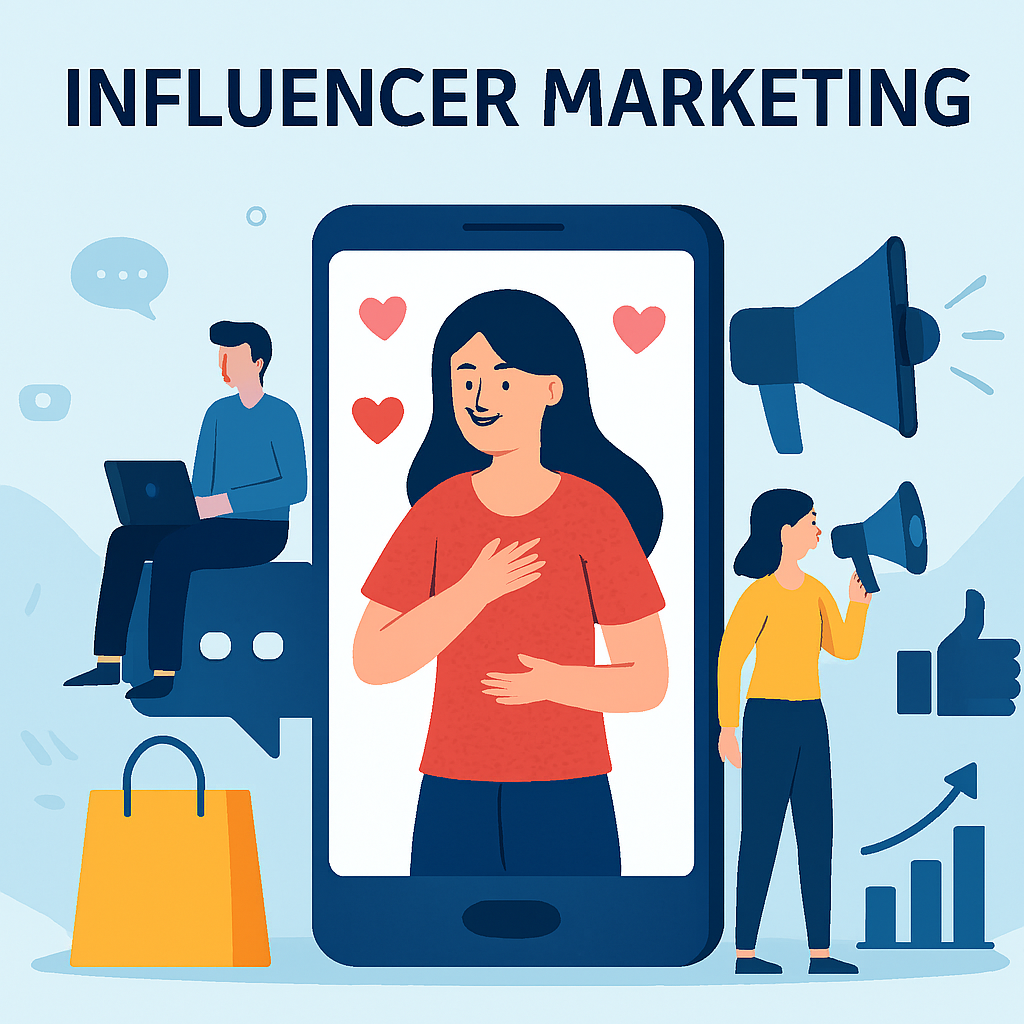
In 2026, Influencer marketing has officially become an essential part of digital marketing. The early days of influencer marketing were simple, but today it’s a wide-ranging ecosystem worth billions, redefining commerce, thought, and social connection in the digital age. In 2026, this trend isn’t just growing—it’s booming.
Today, Businesses of all sizes, from start-ups to multinationals, are investing in influencers at a high rate to reach audiences credibly and increase the return rates. Businesses are investing in influencers for various reasons.
Who are influencers?
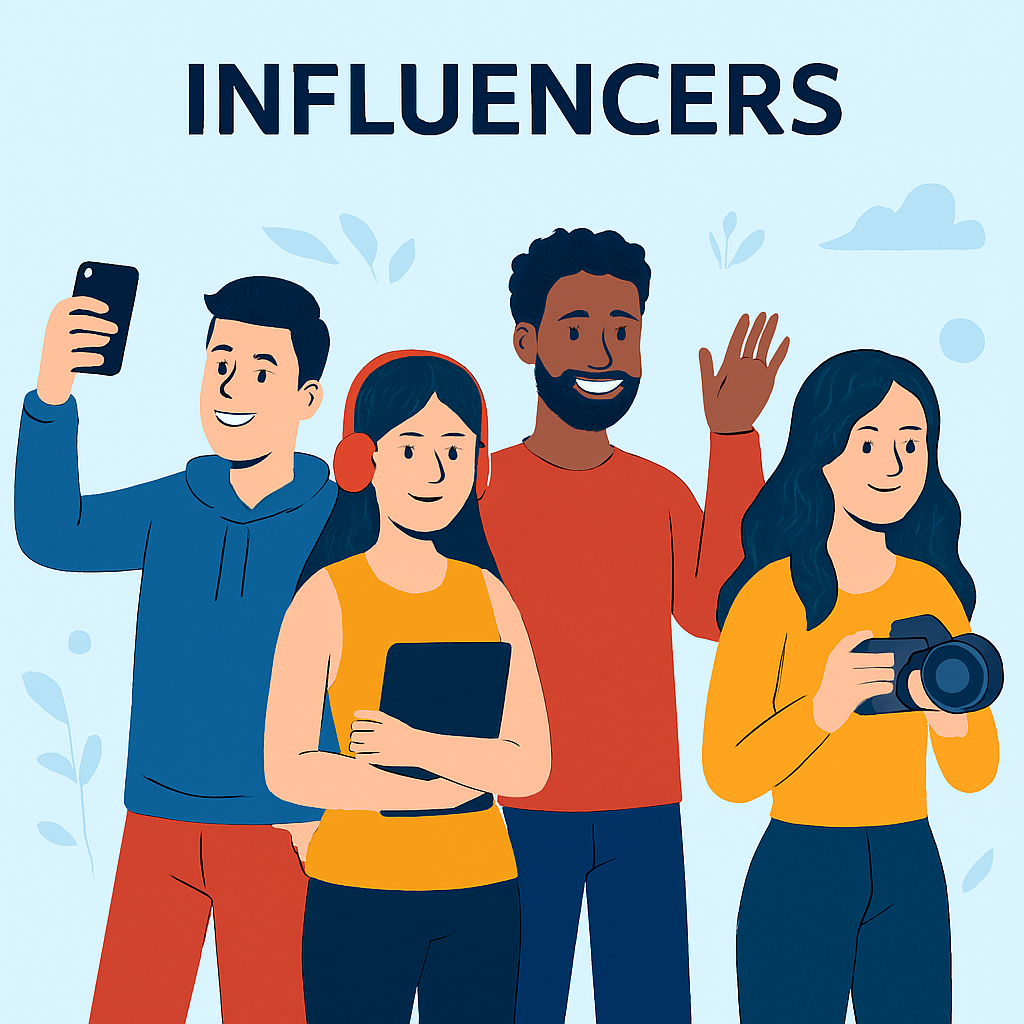
Influencers are individuals who have built a loyal audience on social media and can influence people’s opinions, decisions, or buying behaviour through their content. Influencers establish credibility and trust among their audiences by consistently sharing content that connects with followers—whether through relatable personal narratives, candid product evaluations, demonstrations of expertise, or entertainment that encourages emotional connection.
How can we become influencers?

In 2026, becoming an influencer is completely possible. People with smartphones, a clear niche or consistency, can easily build an audience. There are a few basic guidelines or steps to become an influencer in the market.
Step1. Opt for a Domain You Authentically Connect With
Step2. Choose the right platforms: Instagram, YouTube or Facebook
Step3. Develop a Well-Defined Individual Identity
Step4. Posting content daily
Step5. Create high-quality content
Step6. Engage with the audience on a daily basis
Step7. Use trending audios or hashtags
Step8. Collaborate with other creators.
Step9. Build a strong portfolio
Step10. Start working with brands.
Why choose influencer marketing?
Influencer marketing has become one of the most effective digital marketing strategies in 2026. Influencer marketing is a modern digital marketing strategy where brands collaborate with influencers—people who have built a loyal audience on social media—to promote their products or services. Instead of traditional ads, influencer marketing leverages the trust, authenticity, and influence that creators have over their followers.
Influencer marketing has taken centre stage in 2026, and everyone’s talking about it. Let’s unpack what’s driving this rise and how brands can utilise it to their advantage.
1. Influencers Have Become the New Age Celebrities
The traditional way of advertisement are longer way of promoting brands. In 2026, influencers, especially micro influencers( 10k-100k followers) and nano influencers(1k-10k followers), have built trust and reliability between communities. Now, people feel free to connect with influencers as they share their daily routine experiences with the public.
2. The Shift from Ads to Authenticity
Consumers are tired of ads. Between pop-ups, sponsored videos, and irrelevant banners, traditional advertising is losing its impact. Instead, people prefer content that feels real.Influencer marketing thrives because:
- Buying decisions are influenced by community validation
- It feels conversational, not promotional
- Influencers share personal experiences
- Audiences trust recommendations from real people
3. AI Is Transforming Influencer Marketing
Artificial Intelligence is playing a major role in 2026’s influencer landscape. From campaign planning to performance tracking, AI tools are helping brands make smarter decisions.AI now helps brands:
- Automate influencer outreach
- Identify influencers whose audience matches their goals
- Detect fake followers and ensure authenticity
- Predict campaign performance
5. Short-Form Video Continues to Dominate
Instagram Reels, and YouTube Shorts are still ruling social media in 2026. Short-form videos are quick, addictive, and shareable—perfect for influencer content.
Brands prefer short videos because:
- They grab attention instantly
- They drive higher engagement
- They fit naturally into scrolling behavior
- They provide a fast, memorable impression
6. Brand–Influencer Partnerships Are Becoming Long-Term
Earlier, influencer collaborations were mostly one-time sponsored posts. But in 2026, brands are focusing on long-term relationships.
Why?
- It builds stronger storytelling
- Audiences trust repeated endorsements
- Influencers become real brand ambassadors
7. Influencer Marketing Gives Small Businesses a Powerful Edge
Influencer marketing is not just for big brands—it’s a game-changer for small businesses. With micro influencers becoming more affordable and accessible, local businesses can:
- Reach targeted audiences
- Build instant trust
- Generate high-quality leads
- Drive local footfall
Conclusion
As we move deeper into 2026, it’s clear that influencer marketing is no longer optional—it’s essential. Consumers trust real voices, authentic reviews, and relatable content more than traditional ads. Brands that leverage the power of influencers will continue to grow faster, build stronger communities, and achieve better ROI. Whether you’re a startup, a growing business, or an established brand, now is the time to embrace influencer marketing and make it a core part of your digital strategy. The future belongs to those who create connections—not just campaigns.